Please wait while we open this resource.


K

Clinical reviews
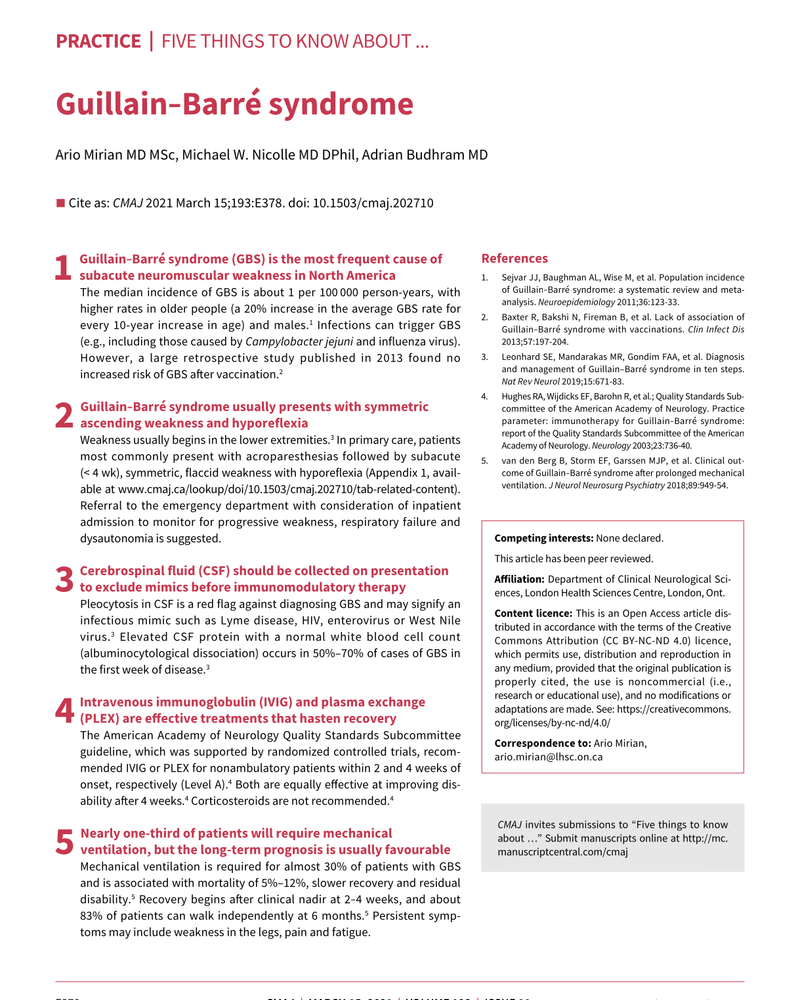
GUILLAIN-BARRÉ SYNDROME
Department of Clinical Neurological Sciences, London Health Sciences Centre, London, Ont.
PDF20211 pages52 KB
This article provides a comprehensive overview of Guillain-Barré syndrome, detailing its incidence, clinical presentation, and the importance of cerebrospinal fluid analysis in diagnosis. It emphasizes effective treatments such as intravenous immunoglobulin and plasma exchange, along with the need for monitoring in severe cases. The long-term prognosis for patients is generally favorable, despite the potential for significant acute complications.
Sign in to open
Ask this resource
Answers use this document only.
Your first question is free.
More like this
Resources from the same specialty and type. Curated links will replace these when added.
Clinical Resources
Documents that extend or complement this resource.

Traumatic Brain Injury
Same clinical topic · Neurology
Classification of the Epilepsies
Same clinical topic · Neurology
Neuroimaging Patterns of Intracranial Infections: Meningitis, Cerebritis, and Their Complications
Same clinical topic · Neurology
An update on management of subarachnoid haemorrhage
Same clinical topic · Neurology
INCLUSION BODY MYOSITIS
Same clinical topic · Neurology
ENCEPHALITIS
Same clinical topic · Neurology
INTRACEREBRAL HAEMORRHAGE
Same clinical topic · Neurology
INCLUSION BODY MYOSITIS
Same clinical topic · Neurology
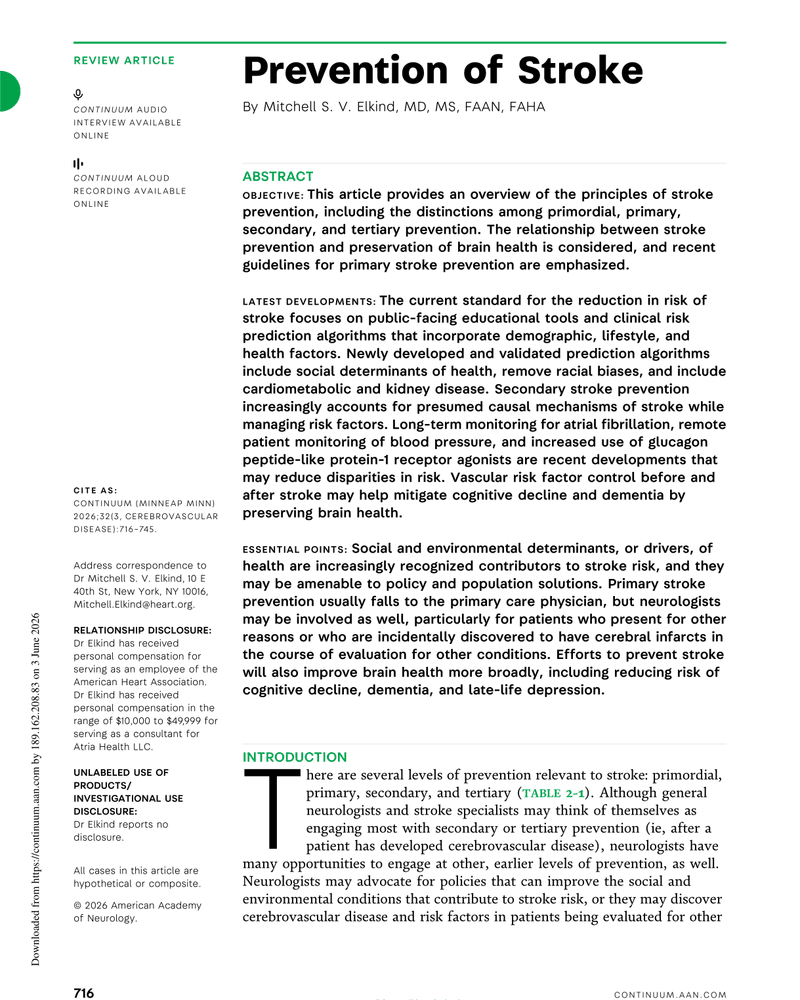
PREVENTION OF STROKE
Same clinical topic · Neurology