Please wait while we open this resource.


K

Clinical reviews
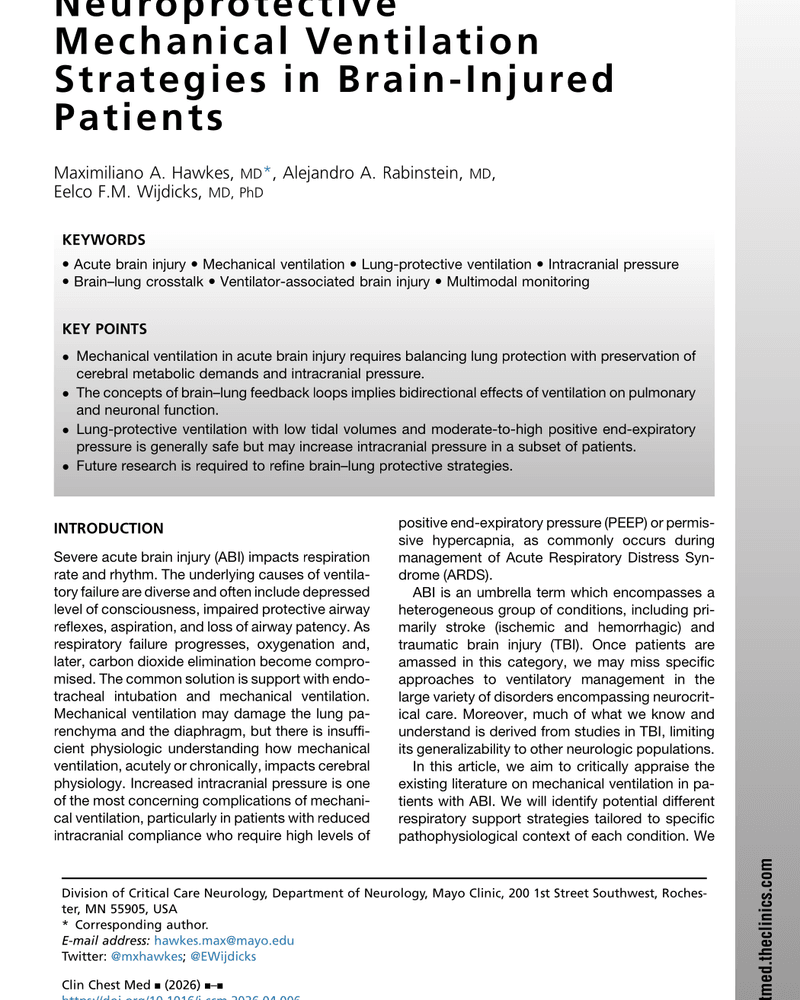
NEUROPROTECTIVE MECHANICAL VENTILATION STRATEGIES IN BRAIN-INJURED PATIENTS
Maximiliano A. Hawkes, MD, Alejandro A. Rabinstein, MD, Eelco F.M. Wijdicks, MD, PhD
PDF8 pages303 KB
Severe acute brain injury can significantly affect respiratory function, necessitating mechanical ventilation. This document explores the complexities of mechanical ventilation in such patients, including the risks of increased intracranial pressure and the importance of lung-protective strategies. It highlights the bidirectional effects of ventilation on both pulmonary and neuronal functions and discusses various ventilation techniques and their implications for patient outcomes.
Sign in to open
Ask this resource
Answers use this document only.
Your first question is free.
More like this
Resources from the same specialty and type. Curated links will replace these when added.
Clinical Resources
Documents that extend or complement this resource.
NEUROCRITICAL CARE
Same specialty · Neurocritical Care
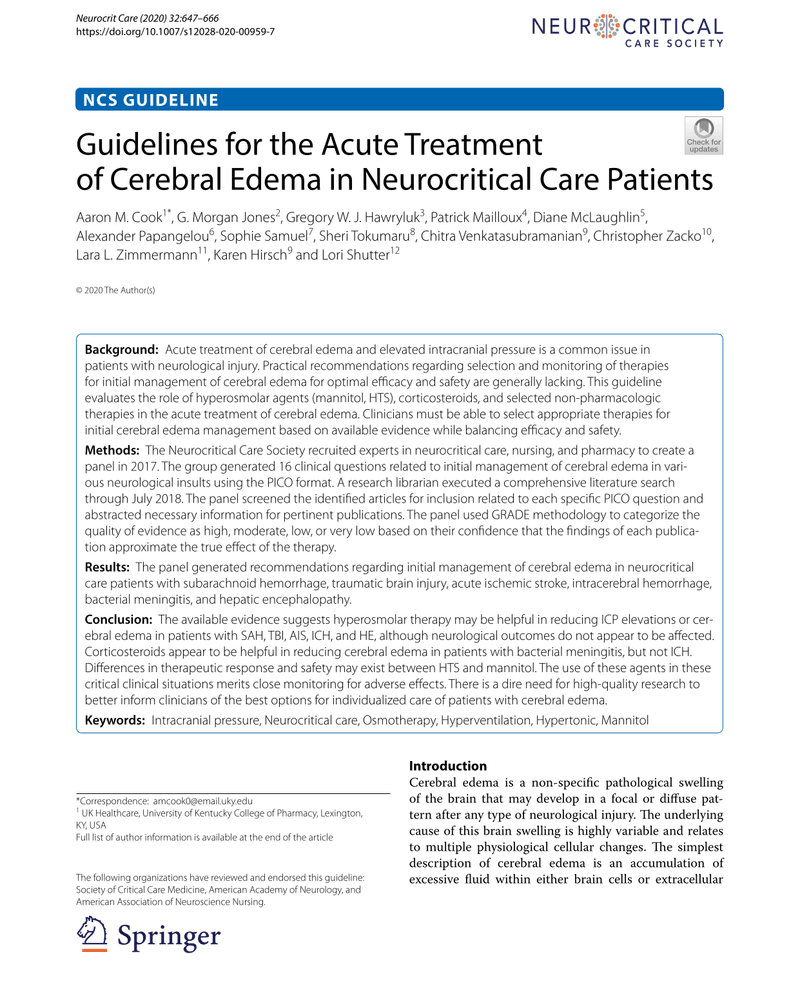
GUIDELINES FOR THE ACUTE TREATMENT OF CEREBRAL EDEMA IN NEUROCRITICAL CARE PATIENTS
Same specialty · Neurocritical Care
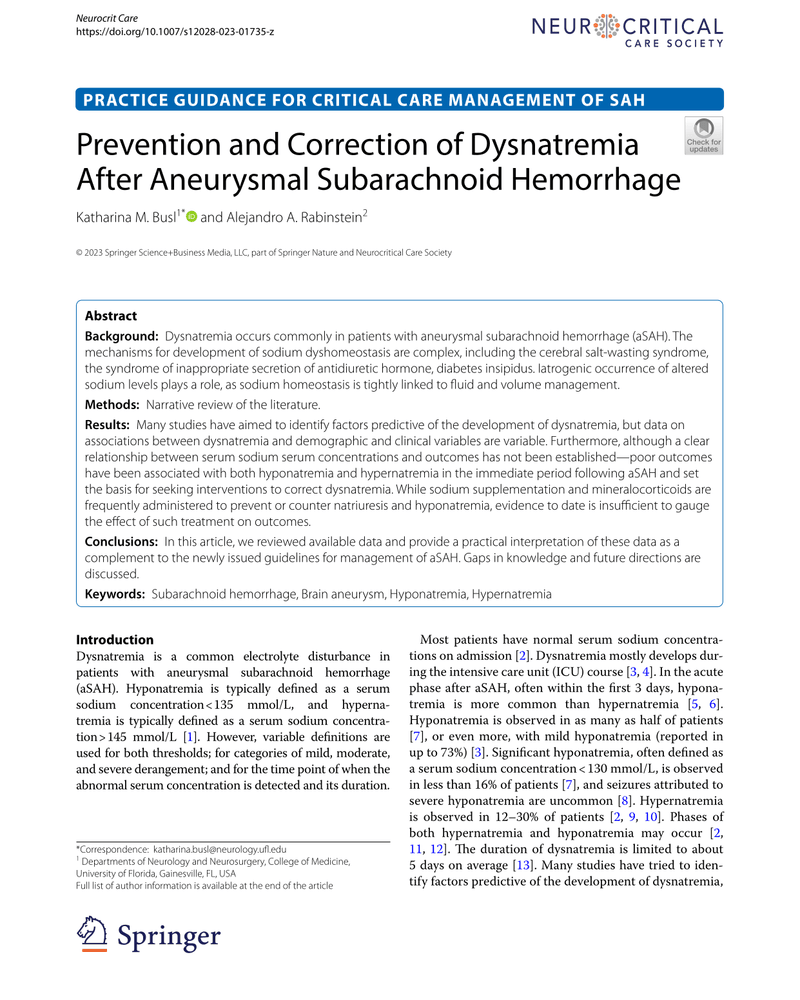
PRACTICE GUIDANCE FOR CRITICAL CARE MANAGEMENT OF SAH
Same specialty · Neurocritical Care

Traumatic Brain Injury
Same resource type · Neurology
ADA Consensus Report: MASLD in People With Diabetes
Same resource type · Endocrinology
Hospital Care for Children Guidelines
Same resource type · Pediatrics

Management of Obesity
Same resource type
Classification of the Epilepsies
Same resource type · Neurology
AOGU Position Statement on Acetaminophen Use in Pregnancy
Same resource type · Obstetrics and Gynecology