Please wait while we open this resource.


K

Clinical reviews
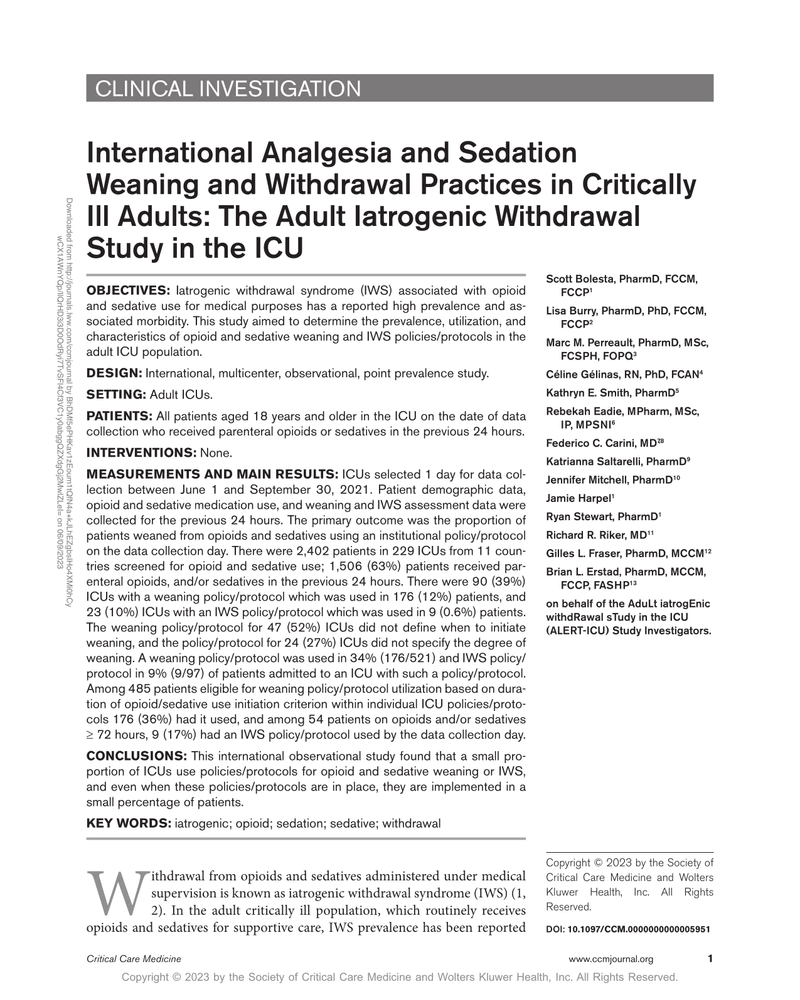
INTERNATIONAL ANALGESIA AND SEDATION WEANING AND WITHDRAWAL PRACTICES IN CRITICALLY ILL ADULTS: THE ADULT IATROGENIC WITHDRAWAL STUDY IN THE ICU
Dr. Bolesta
PDF202313 pages4.8 MB
Iatrogenic withdrawal syndrome (IWS) associated with opioid and sedative use for medical purposes has a reported high prevalence and associated morbidity. This international, multicenter, observational study collected data from adult ICUs to assess the weaning practices and policies related to opioids and sedatives. The findings revealed significant gaps in the implementation of weaning protocols and the assessment of IWS, highlighting the need for standardized approaches in critical care settings.
Sign in to open
Ask this resource
Answers use this document only.
Your first question is free.
More like this
Resources from the same specialty and type. Curated links will replace these when added.
Clinical Resources
Documents that extend or complement this resource.
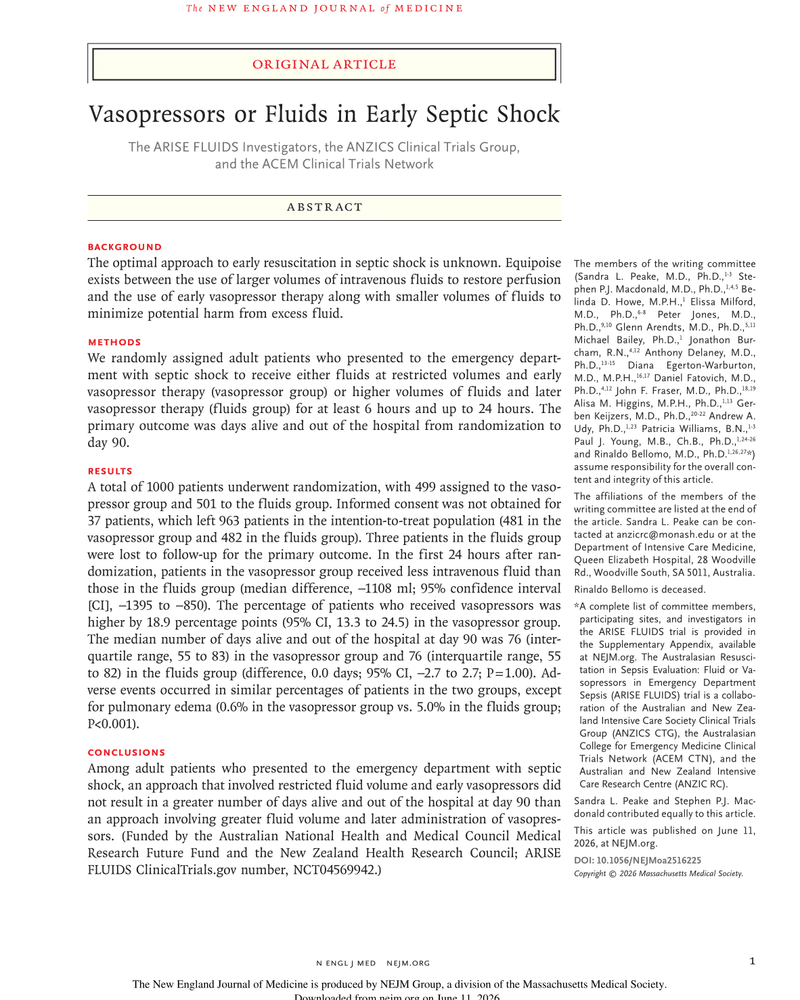
VASOPRESSORS OR FLUIDS IN EARLY SEPTIC SHOCK
Same clinical topic · Critical Care Medicine
LOWER VS HIGHER FLUID VOLUMES IN ADULT PATIENTS WITH SEPSIS - AN UPDATED SYSTEMATIC REVIEW WITH META-ANALYSIS AND TRIAL SEQUENTIAL ANALYSIS
Same clinical topic · Critical Care Medicine
HEPARIN-INDUCED THROMBOCYTOPAENIA
Same clinical topic · Critical Care Medicine
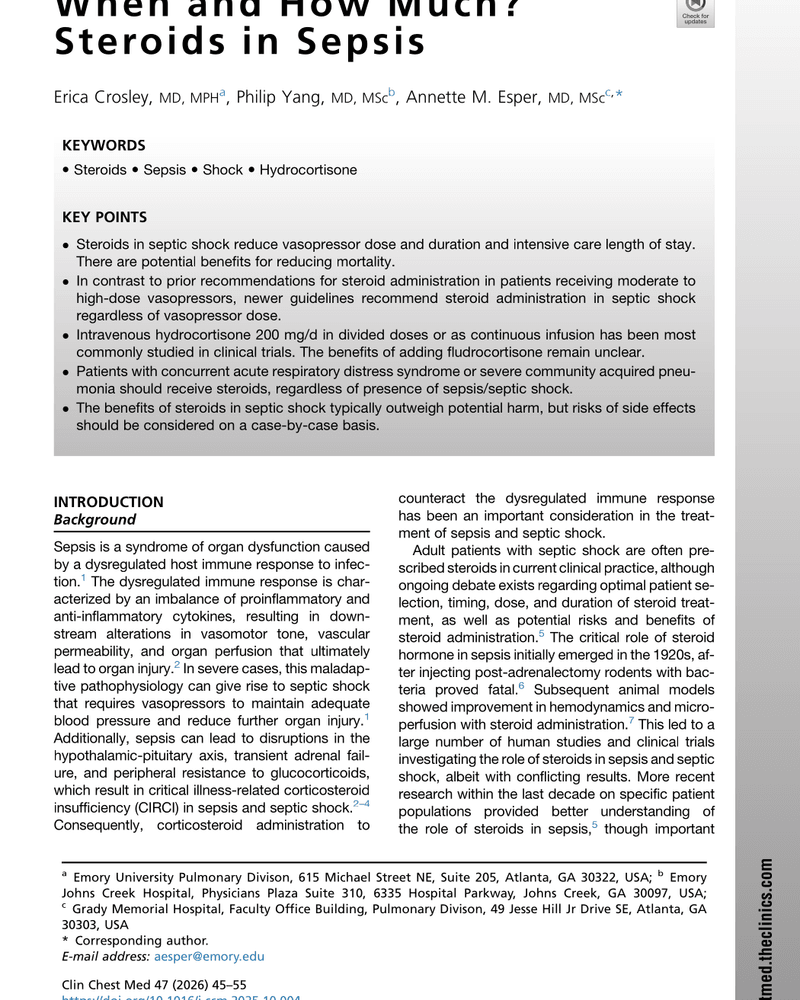
WHEN AND HOW MUCH? STEROIDS IN SEPSIS
Same clinical topic · Critical Care Medicine
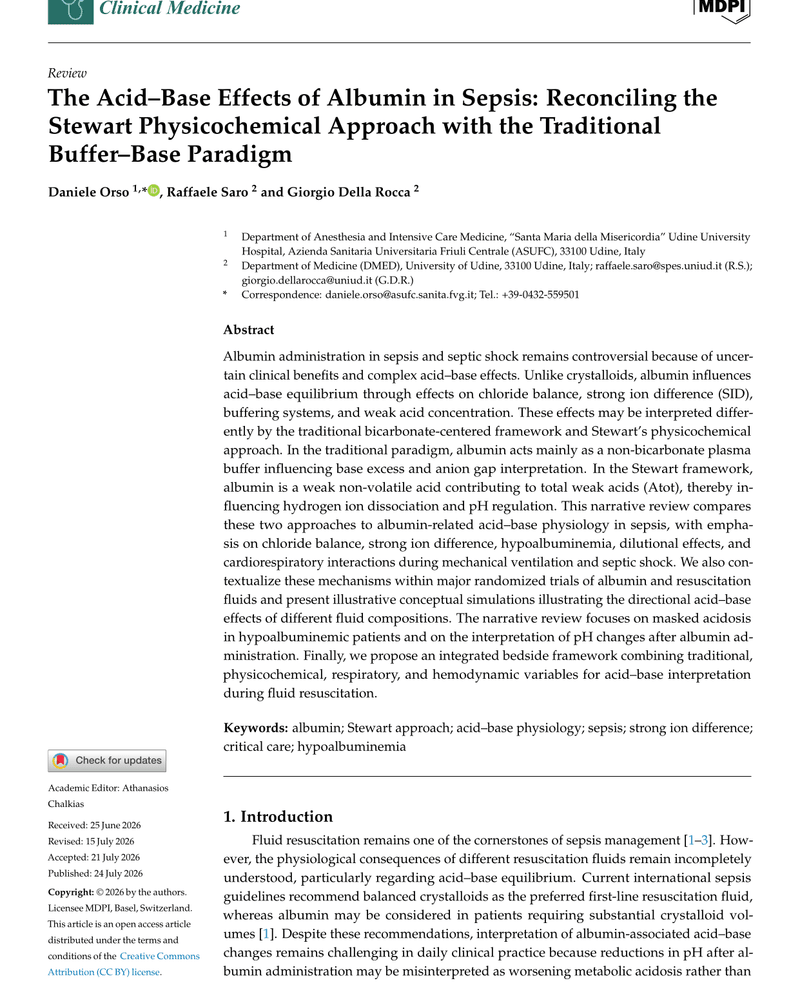
THE ACID-BASE EFFECTS OF ALBUMIN IN SEPSIS: RECONCILING THE STEWART PHYSICOCHEMICAL APPROACH WITH THE TRADITIONAL BUFFER-BASE PARADIGM
Same clinical topic · Critical Care Medicine
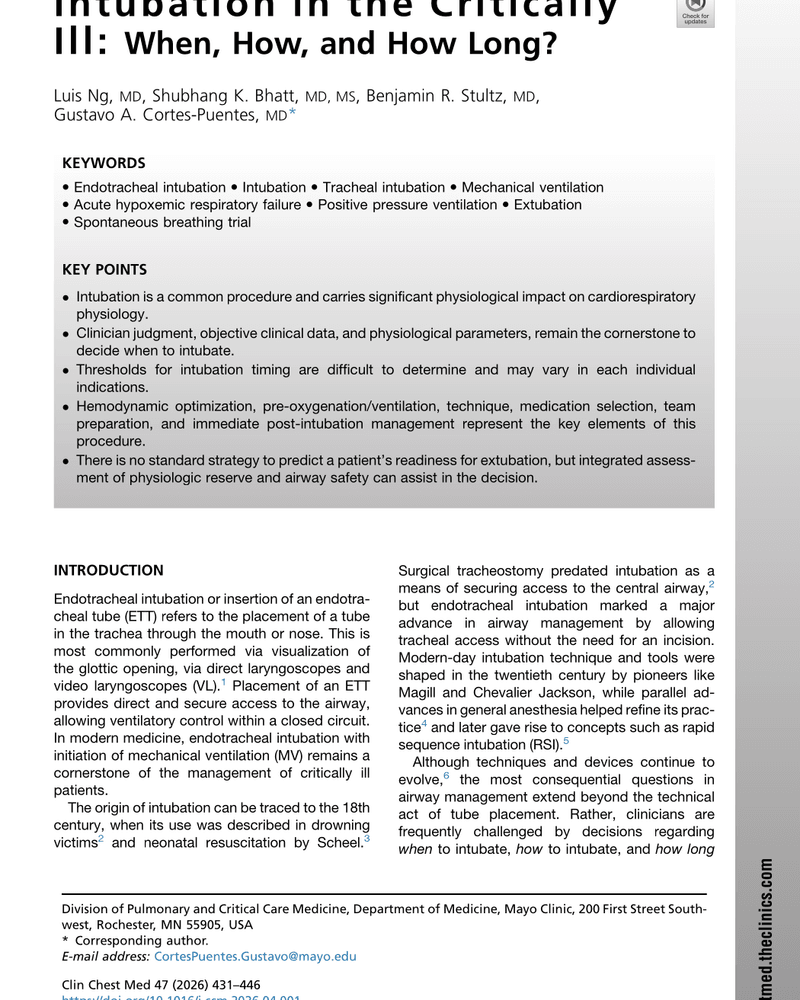
Intubation in the Critically Ill: When, How, and How Long?
Same clinical topic · Critical Care Medicine
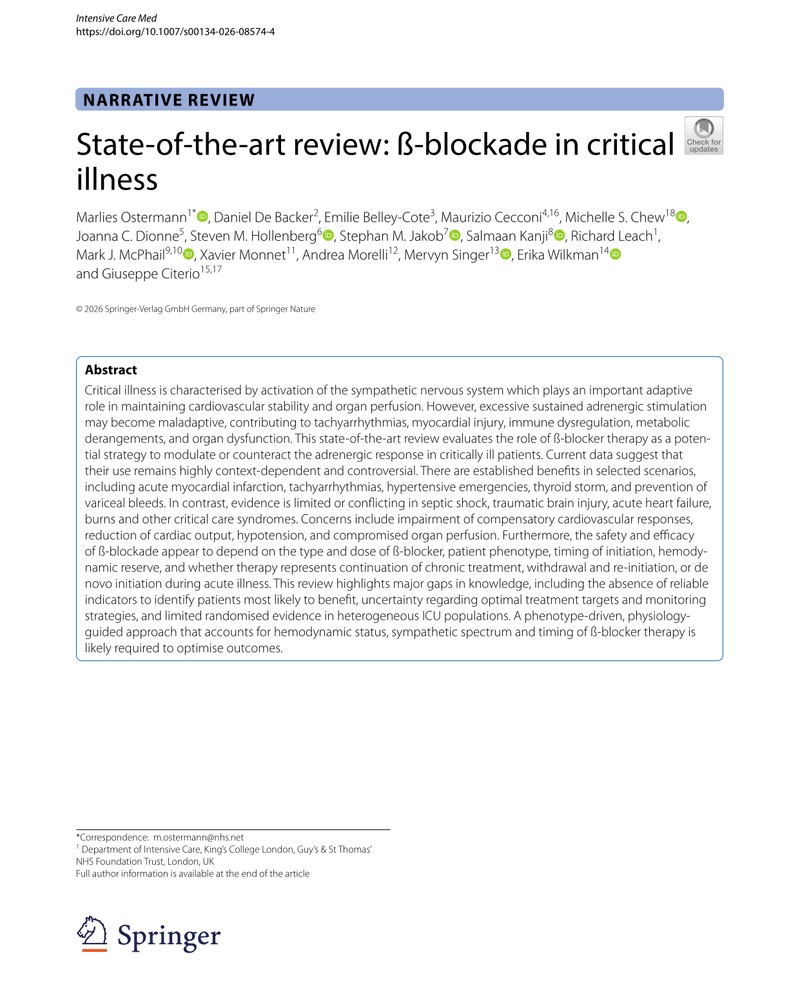
STATE - OF - THE - ART REVIEW: ß - BLOCKADE IN CRITICAL ILLNESS
Same clinical topic · Critical Care Medicine
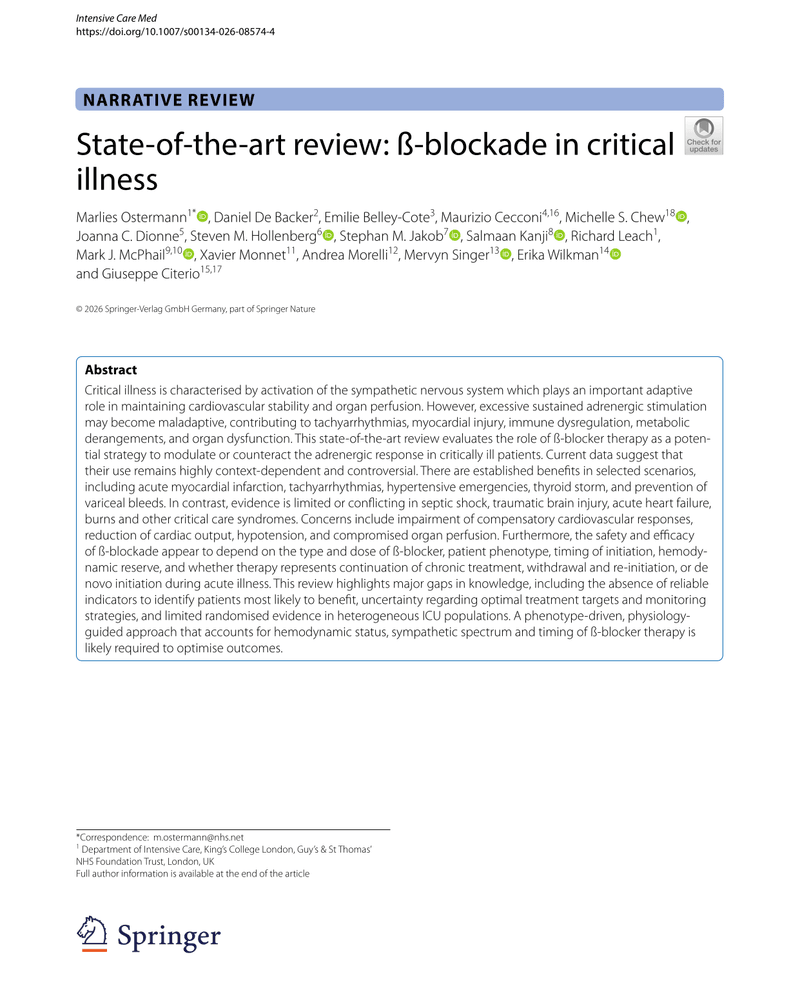
STATE - OF - THE - ART REVIEW: ß - BLOCKADE IN CRITICAL ILLNESS
Same clinical topic · Critical Care Medicine
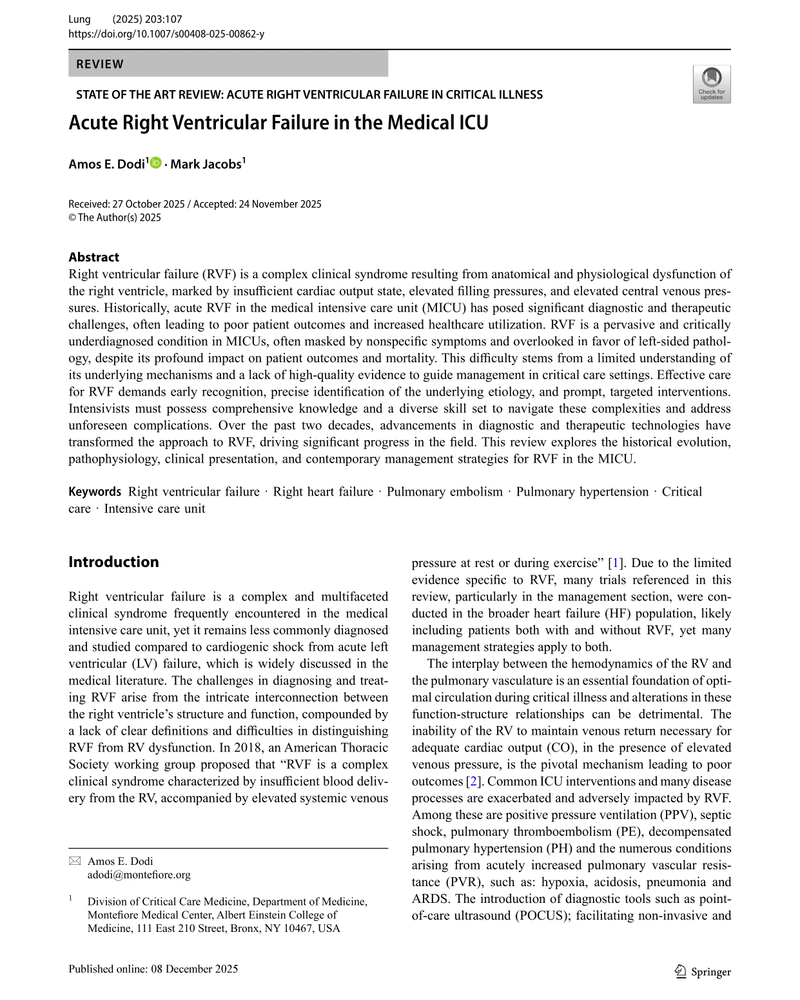
ACUTE RIGHT VENTRICULAR FAILURE IN THE MEDICAL ICU
Same clinical topic · Critical Care Medicine