Please wait while we open this resource.


K

Clinical reviews
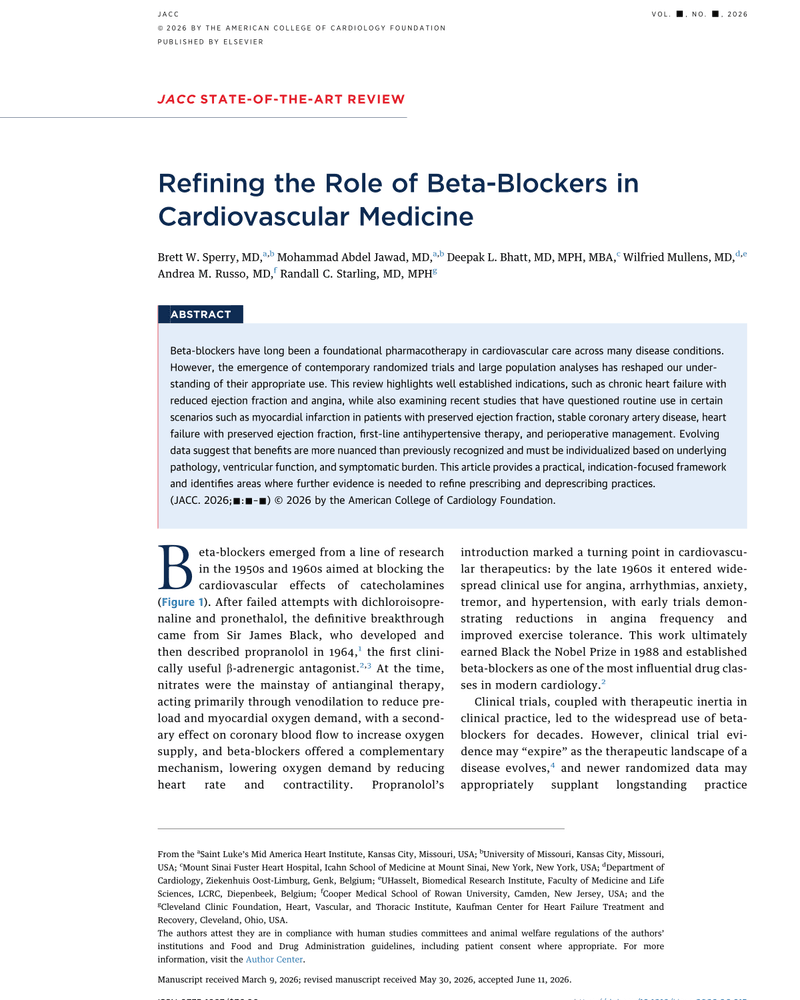
REFINING THE ROLE OF BETA-BLOCKERS INCARDIOVASCULAR MEDICINE
Saint Luke’s Mid America Heart Institute, University of Missouri, Mount Sinai Fuster Heart Hospital, Ziekenhuis Oost-Limburg, UHasselt, Cooper Medical School of Rowan University, Cleveland Clinic Foundation
PDF202622 pages5.2 MB
Beta-blockers have historically been a cornerstone of treatment in cardiovascular medicine, but recent randomized trials and population studies have prompted a reevaluation of their use. This review synthesizes contemporary evidence regarding beta-blocker efficacy and safety, particularly in conditions such as heart failure and atrial fibrillation. The authors discuss the need for updated clinical guidelines that reflect these new insights and address the challenges of therapeutic inertia in clinical practice.
Sign in to open
Ask this resource
Answers use this document only.
Your first question is free.
More like this
Resources from the same specialty and type. Curated links will replace these when added.
Clinical Resources
Documents that extend or complement this resource.
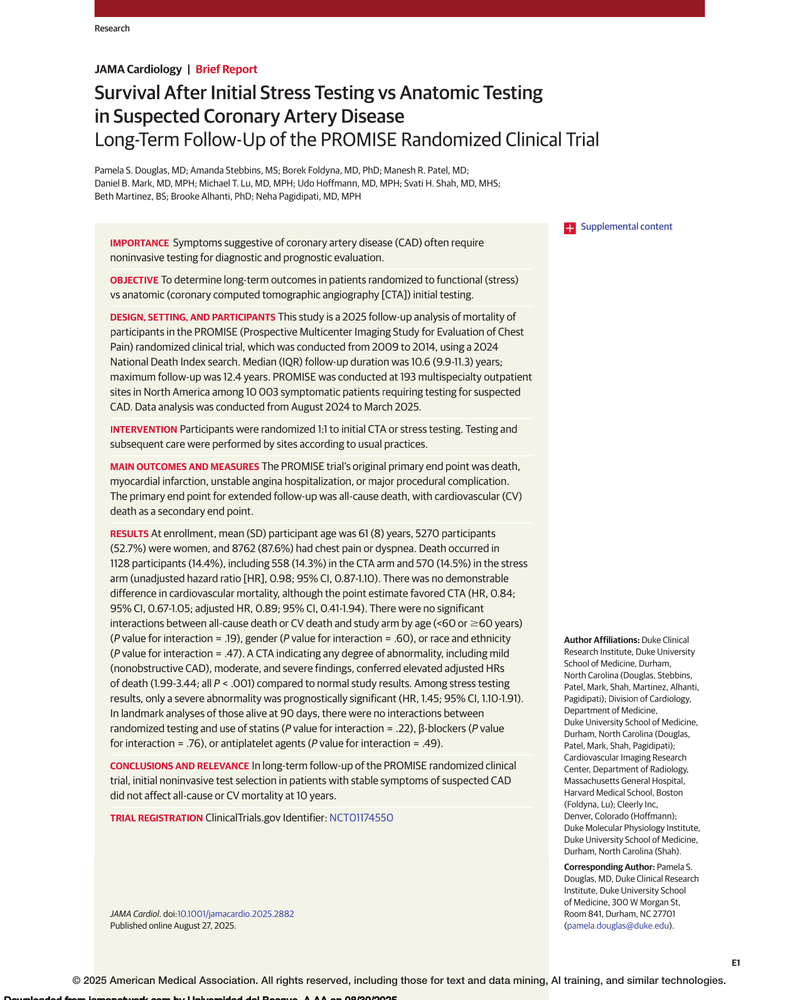
SURVIVAL AFTER INITIAL STRESS TESTING VS ANATOMIC TESTING IN SUSPECTED CORONARY ARTERY DISEASE
Same clinical topic · Cardiology
PRACTICAL CARDIO-ONCOLOGY
Same clinical topic · Cardiology
OXFORD CARDIOLOGY LIBRARY: Hypertension
Same clinical topic · Cardiology
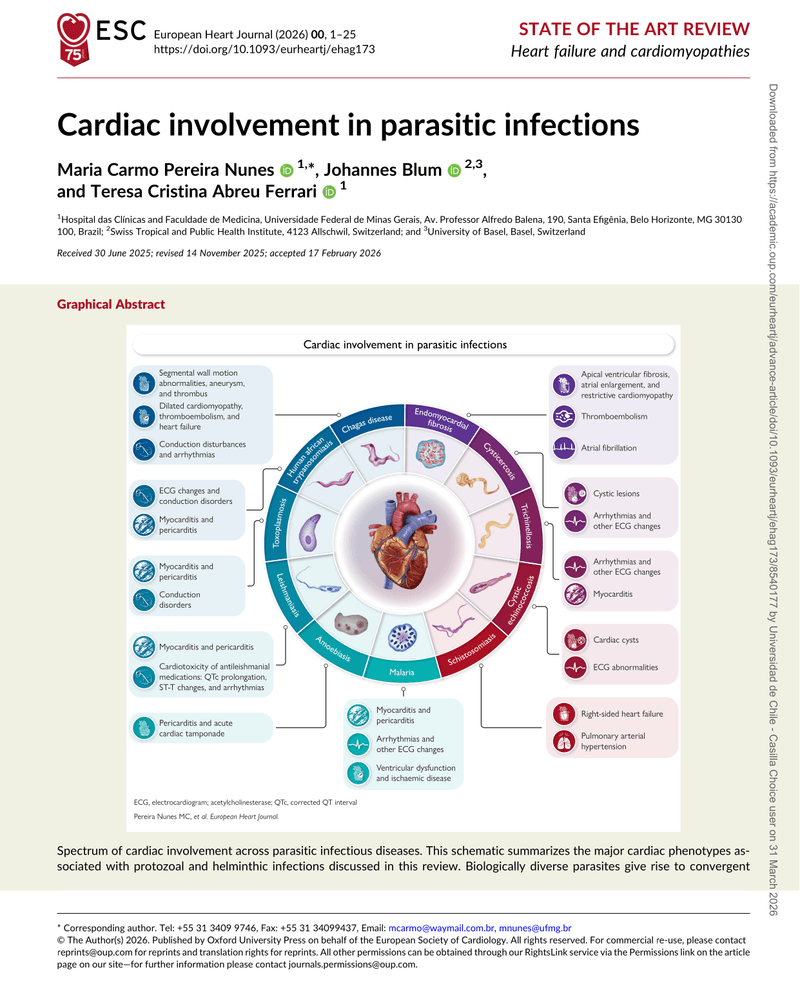
CARDIAC INVOLVEMENT IN PARASITIC INFECTIONS
Same clinical topic · Cardiology
The Athlete’s ECG
Same clinical topic · Cardiology
Antigen carbohydrate 125 as a biomarker in heart failure: a narrative review
Same clinical topic · Cardiology
Current ECG Aspects of Interatrial Block
Same clinical topic · Cardiology
Arrhythmic mitral valve prolapse in 2023: Evidence-based update
Same clinical topic · Cardiology
INTERPRETING THE NORMAL PACEMAKER
Same clinical topic · Cardiology