Please wait while we open this resource.


K

Clinical reviews
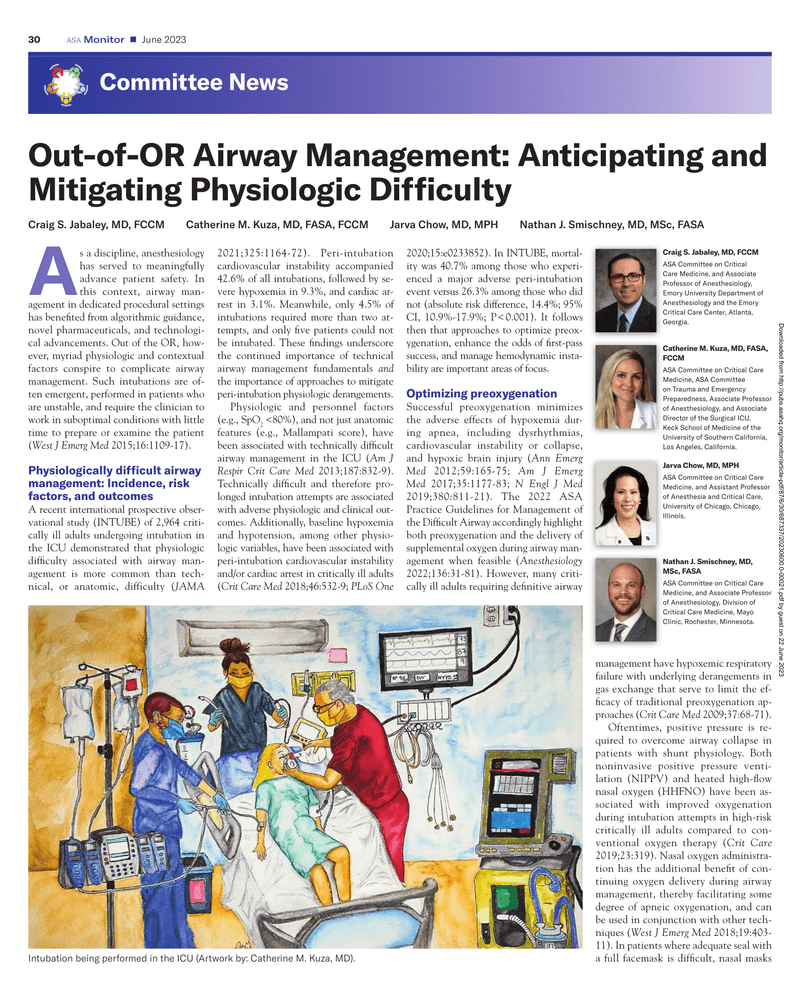
OUT-OF-OR AIRWAY MANAGEMENT: ANTICIPATING AND MITIGATING PHYSIOLOGIC DIFFICULTY
Craig S. Jabaley, MD, FCCM; Catherine M. Kuza, MD, FASA, FCCM; Jarva Chow, MD, MPH; Nathan J. Smischney, MD, MSc, FASA
PDF20232 pages431 KB
The document highlights the advancements in anesthesiology that have improved patient safety, particularly in airway management. It notes that out-of-OR intubations often occur under emergent conditions with unstable patients, complicating the process. The authors present evidence from recent studies indicating that physiologic difficulties are more common than technical challenges during intubation, underscoring the need for effective management strategies to enhance patient outcomes.
Sign in to open
Ask this resource
Answers use this document only.
Your first question is free.
More like this
Resources from the same specialty and type. Curated links will replace these when added.
Clinical Resources
Documents that extend or complement this resource.
Efficacy and safety of supraclavicular versus infraclavicular approach for subclavian vein catheterisation: An updated systematic review and meta-analysis of randomised controlled trials
Same clinical topic · Anesthesiology
ULTRASOUND-GUIDED CENTRAL VENOUS CATHETER PLACEMENT: A STRUCTURED REVIEW AND RECOMMENDATIONS FOR CLINICAL PRACTICE
Same clinical topic · Anesthesiology
COAGULATION SUPPORT DURING PERIOPERATIVE BLEEDING MANAGEMENT
Same clinical topic · Anesthesiology
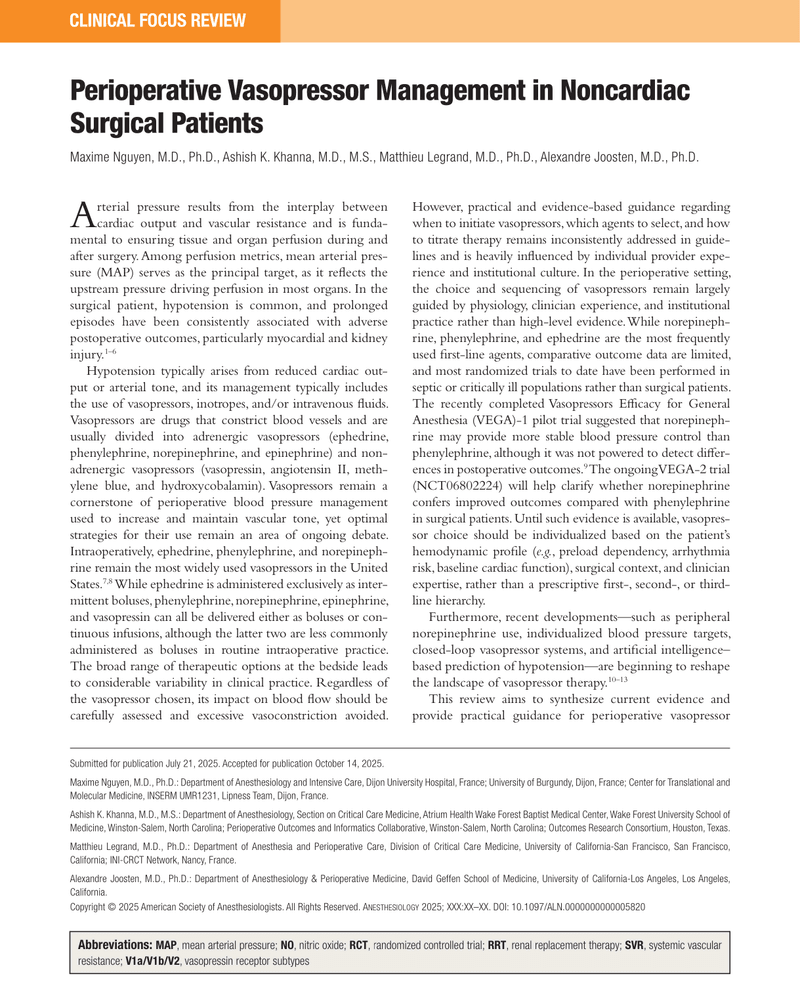
PERIOPERATIVE VASOPRESSOR MANAGEMENT IN NONCARDIAC SURGICAL PATIENTS
Same clinical topic · Anesthesiology
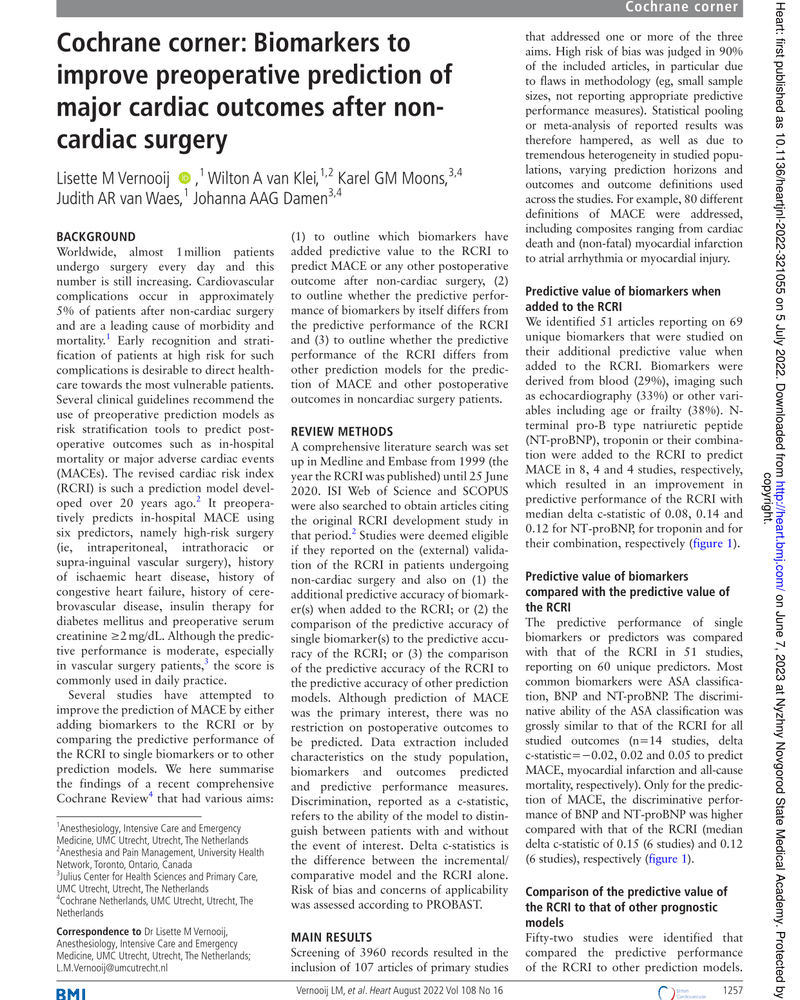
BIOMARKERS TO IMPROVE PREOPERATIVE PREDICTION OF MAJOR CARDIAC OUTCOMES AFTER NON-CARDIAC SURGERY
Same clinical topic · Anesthesiology
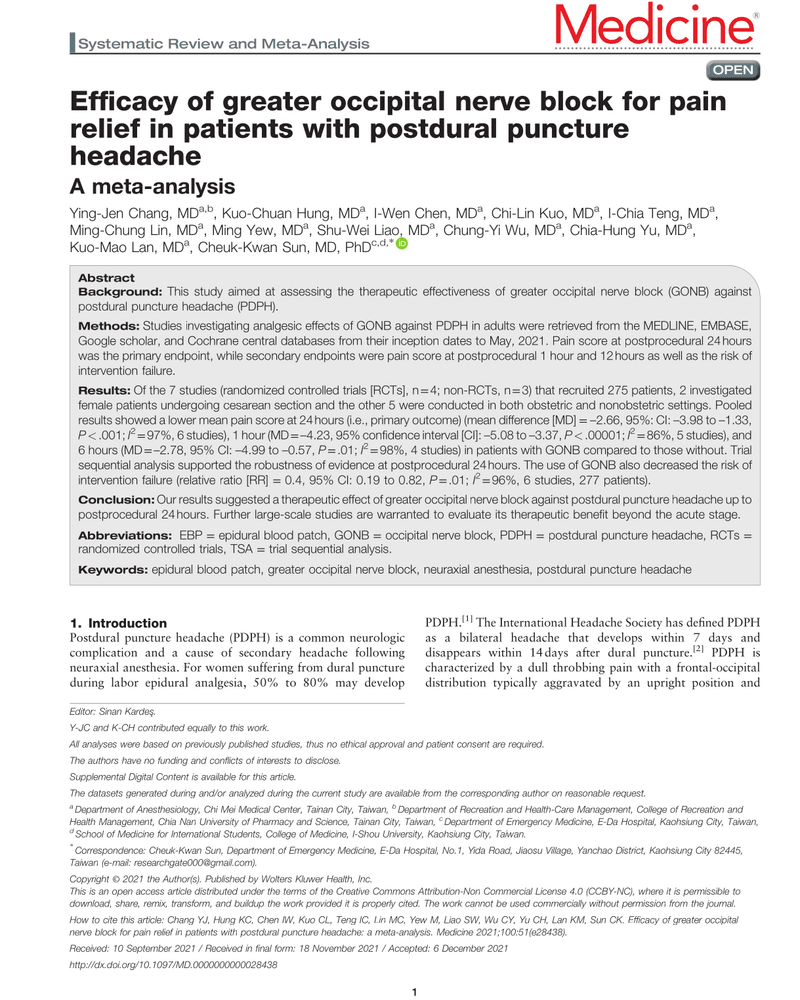
EFFICACY OF GREATER OCCIPITAL NERVE BLOCK FOR PAIN RELIEF IN PATIENTS WITH POSTDURAL PUNCTURE HEADACHE
Same clinical topic · Anesthesiology
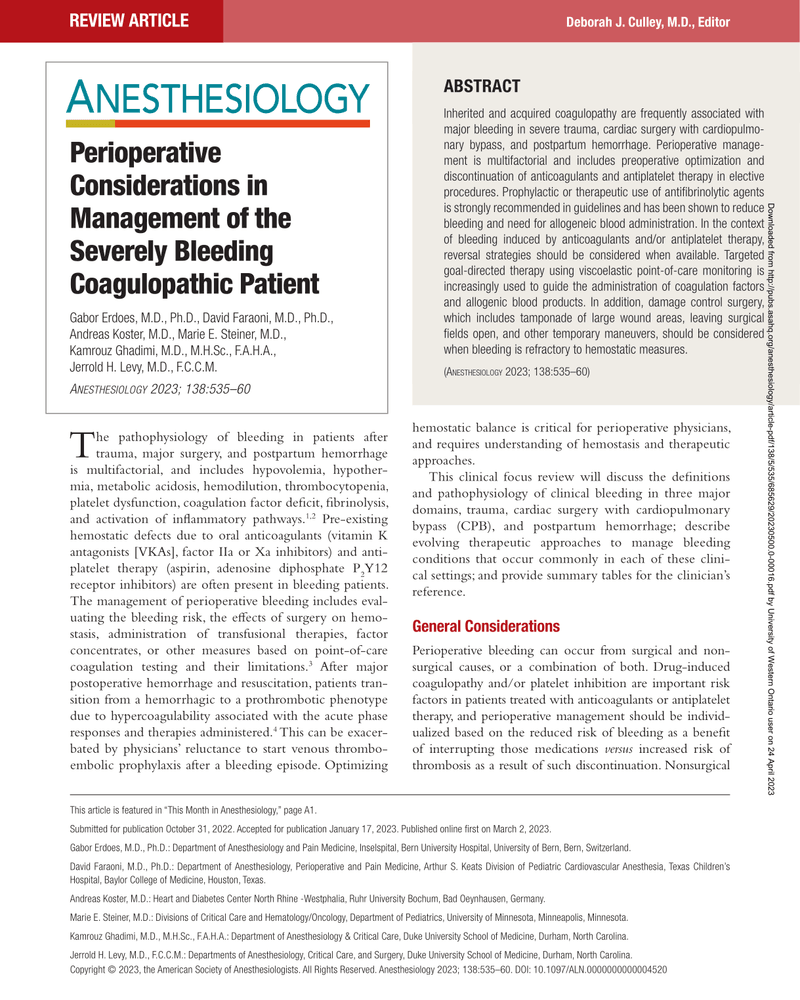
PERIOPERATIVE CONSIDERATIONS IN MANAGEMENT OF THE SEVERELY BLEEDING COAGULOPATHIC PATIENT
Same clinical topic · Anesthesiology
DRUG THERAPY FOR TREATING POST-DURAL PUNCTURE HEADACHE (REVIEW)
Same clinical topic · Anesthesiology
POST-DURAL PUNCTURE HEADACHE
Same clinical topic · Anesthesiology