Please wait while we open this resource.


K

Medicines & prescribing
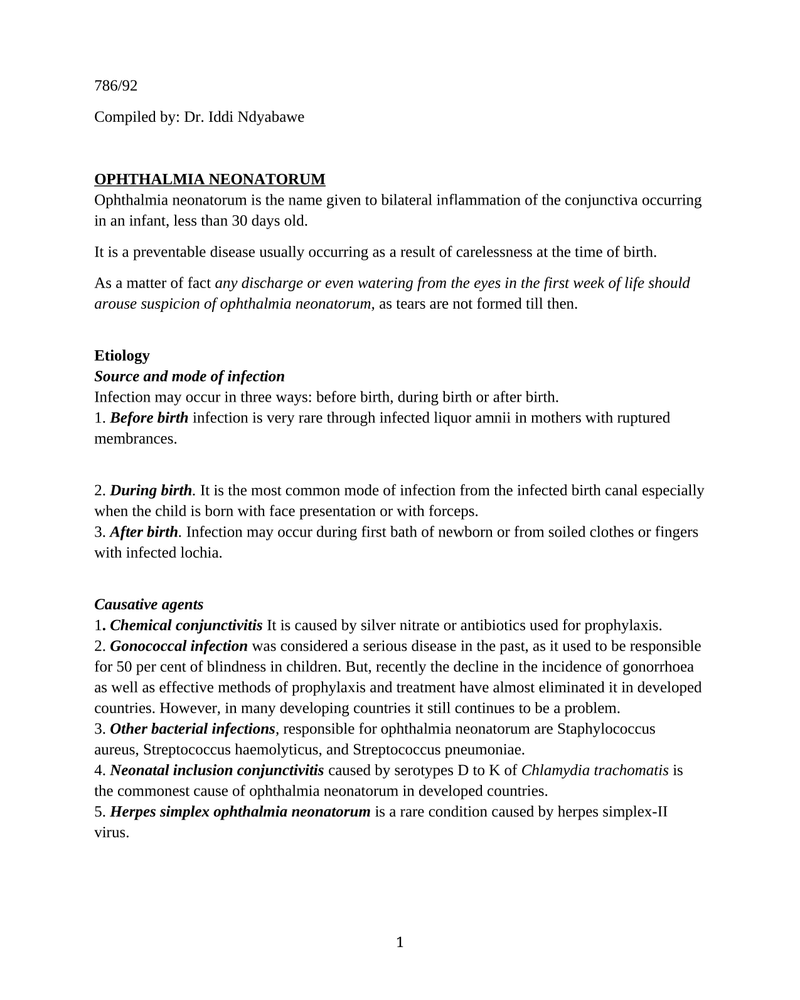
Ophthalmia neonatorum
Dr. Iddi Ndyabawe
DOCX1 pages44 KB
Ophthalmia neonatorum is a bilateral conjunctival inflammation occurring in infants under 30 days old, often resulting from perinatal exposure to infectious agents. The document outlines the modes of transmission—prenatal, intrapartum, and postnatal—and details the common causative organisms, including gonococcus, Chlamydia trachomatis, Staphylococcus aureus, and herpes simplex virus. Clinical features such as discharge type, lid swelling, and potential corneal involvement are described, along with possible complications like corneal ulceration. Prophylactic measures spanning antenatal, natal, and postnatal care are emphasized, followed by specific curative treatment regimens for different pathogens. The guide also provides dosing recommendations for topical and systemic antibiotics and antivirals.
Sign in to open
Ask this resource
Answers use this document only.
Your first question is free.
More like this
Resources from the same specialty and type. Curated links will replace these when added.
Clinical Resources
Documents that extend or complement this resource.
SELF ASSESSMENT AND REVIEW OF OPHTHALMOLOGY
Same specialty · Ophthalmology
DISEASES OF CONJUNCTIVA
Same specialty · Ophthalmology
disorders of lacrimal system ppt
Same specialty · Ophthalmology
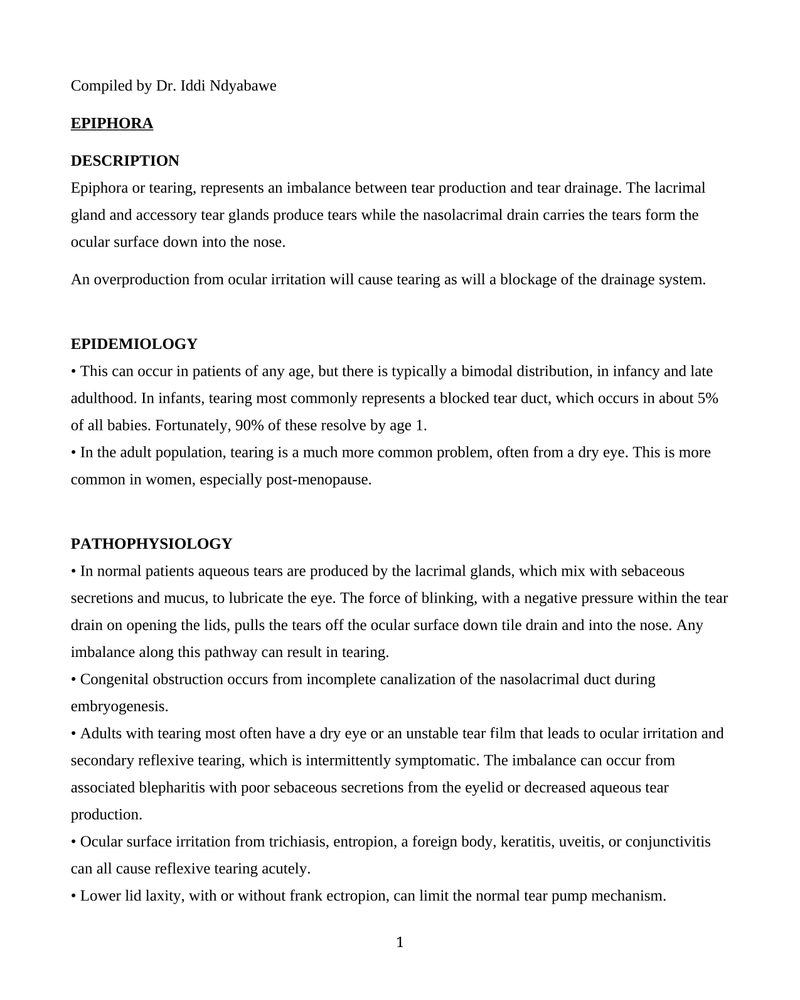
Epiphora
Same specialty · Ophthalmology
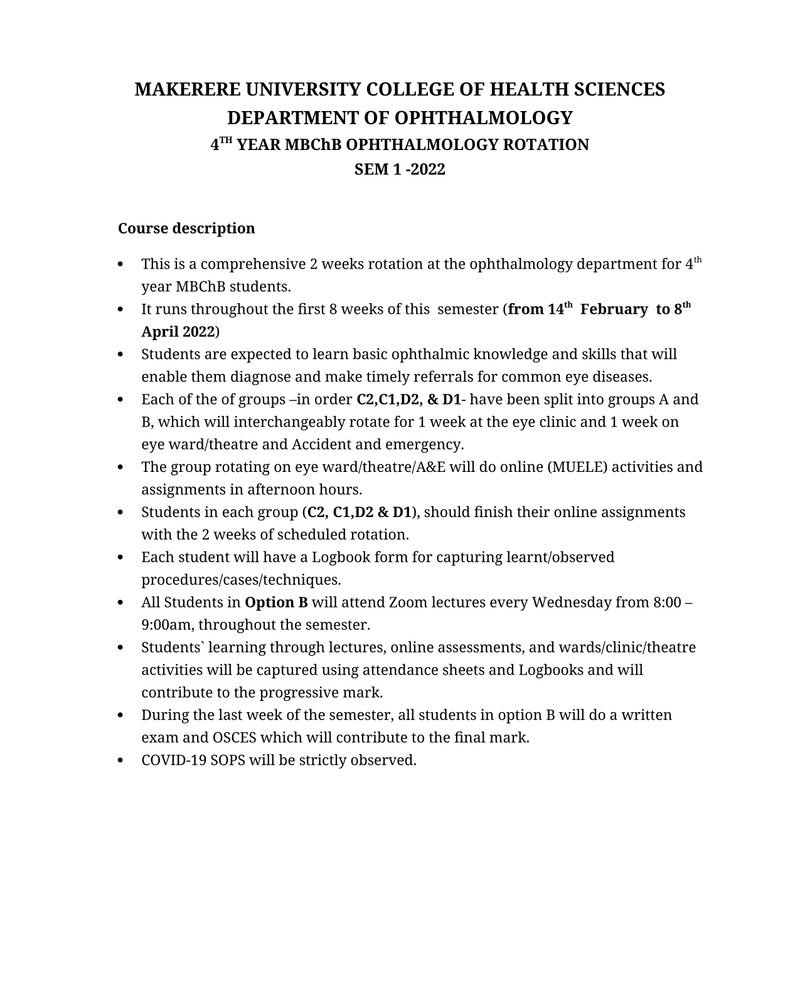
Course description
Same specialty · Ophthalmology
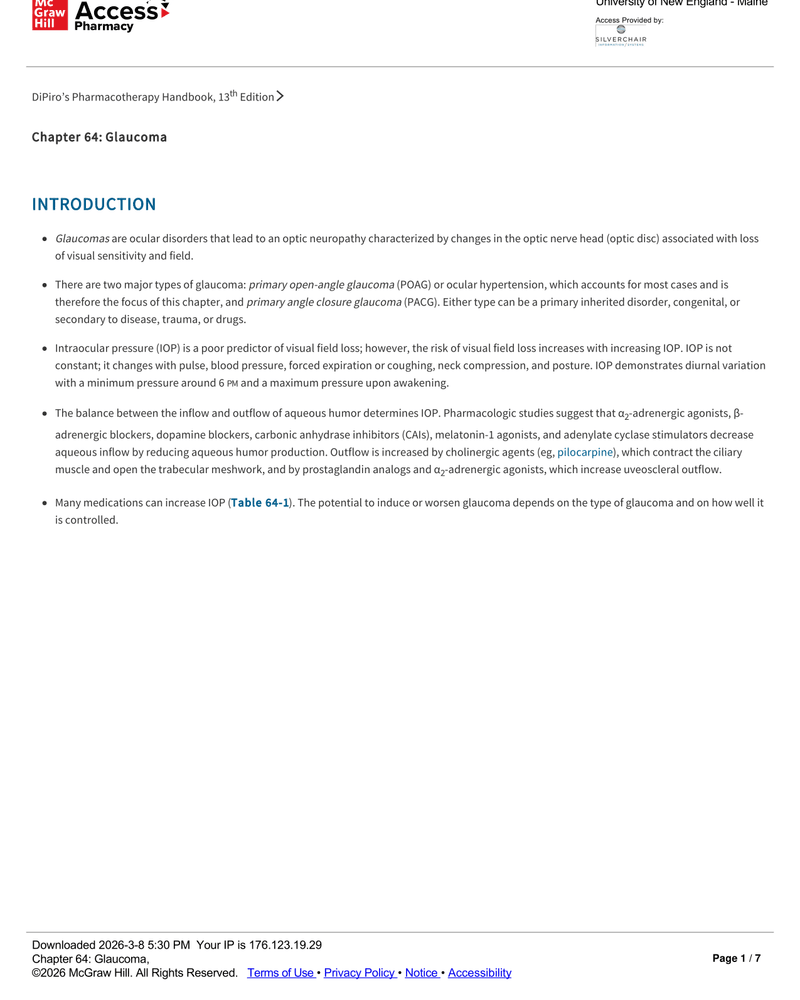
Chapter 64: Glaucoma
Same specialty · Ophthalmology
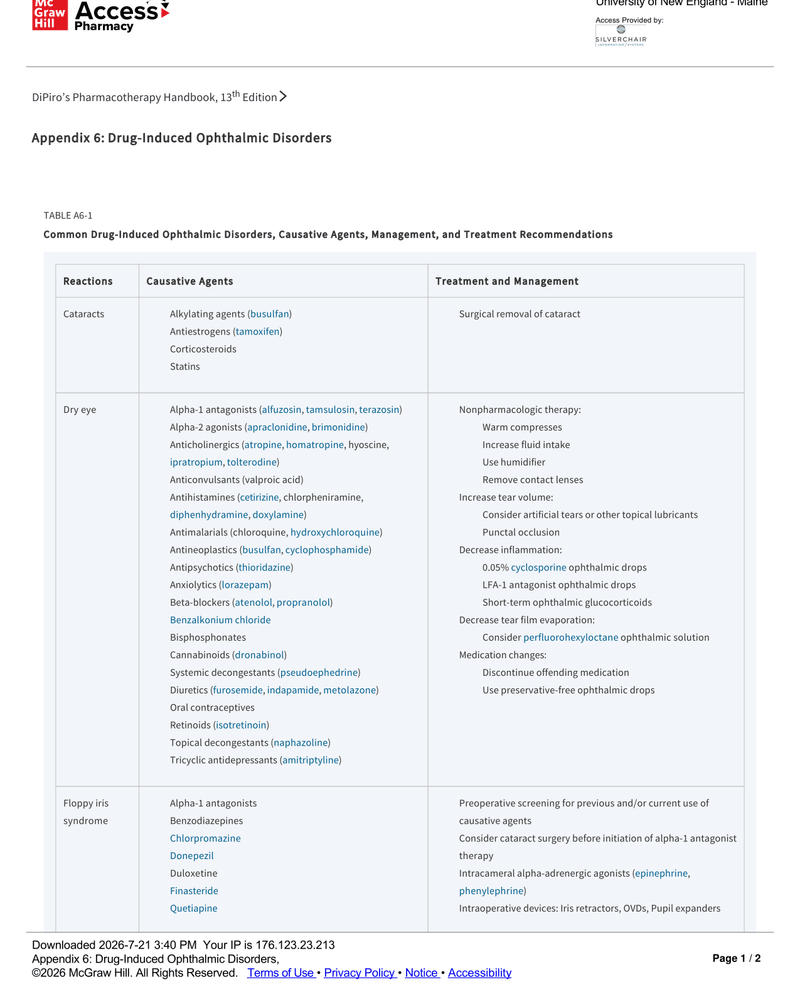
APPENDIX 6: DRUG-INDUCED OPHTHALMIC DISORDERS
Same specialty · Ophthalmology
A RAPID REVIEW OF THE RED EYE
Same specialty · Ophthalmology
EMPLOYMENT/CAREER OPPORTUNITY
Same specialty · Ophthalmology