Please wait while we open this resource.


K

Guidelines & protocols
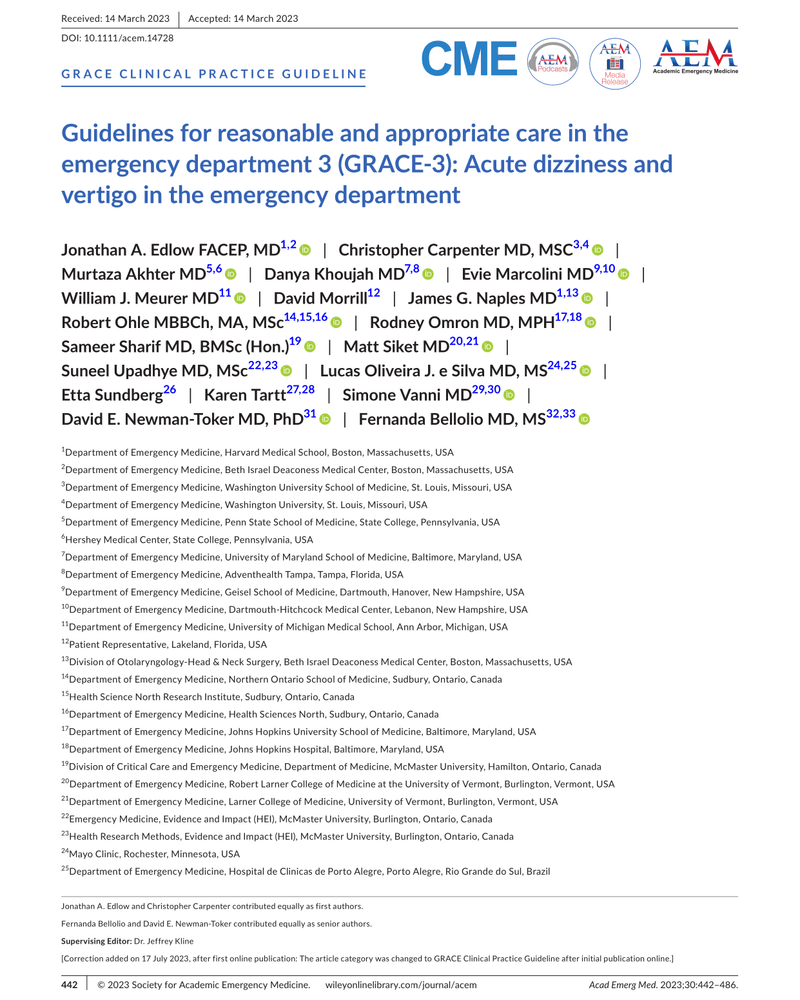
GUIDELINES FOR REASONABLE AND APPROPRIATE CARE IN THE EMERGENCY DEPARTMENT 3 (GRACE-3): ACUTE DIZZINESS AND VERTIGO IN THE EMERGENCY DEPARTMENT
Harvard Medical School, Beth Israel Deaconess Medical Center, Washington University School of Medicine, Penn State School of Medicine, University of Maryland School of Medicine, Geisel School of Medicine, Dartmouth
PDF202345 pages5.7 MB
The guidelines aim to assist emergency medicine practitioners in making informed decisions regarding the assessment and treatment of patients presenting with dizziness and vertigo. It includes recommendations based on the latest evidence and expert consensus to improve patient outcomes and resource utilization. The document emphasizes the importance of focused history-taking and appropriate diagnostic criteria to differentiate between various causes of dizziness.
No account needed
Ask this resource
Answers use this document only.
More like this
Resources from the same specialty and type. Curated links will replace these when added.
Clinical Resources
Documents that extend or complement this resource.
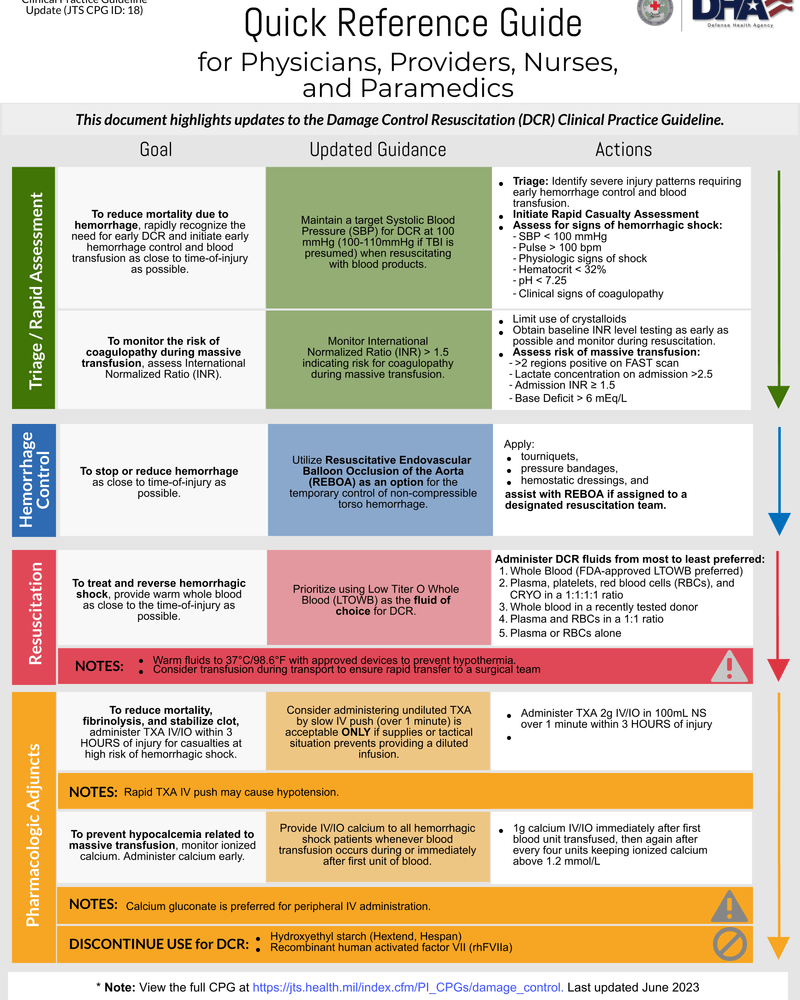
QUICK REFERENCE GUIDE FOR PHYSICIANS, PROVIDERS, NURSES, AND PARAMEDICS
Same clinical topic · Emergency Medicine
GUIDELINES FOR REASONABLE AND APPROPRIATE CARE IN THE EMERGENCY DEPARTMENT 3 (GRACE-3): ACUTE DIZZINESS AND VERTIGO IN THE EMERGENCY DEPARTMENT
Same clinical topic · Emergency Medicine
PREHOSPITAL GUIDELINES FOR THE MANAGEMENT OF TRAUMATIC BRAIN INJURY – 3RD EDITION
Same clinical topic · Emergency Medicine
EUROPEAN RESUSCITATION COUNCIL GUIDELINES 2025 FIRST AID
Same clinical topic · Emergency Medicine
HYPERTENSIVE EMERGENCIES: GUIDELINES AND BEST-PRACTICE RECOMMENDATIONS
Same clinical topic · Emergency Medicine
MULTIPLE TRAUMA MANAGEMENT IN MOUNTAIN ENVIRONMENTS - A SCOPING REVIEW
Same clinical topic · Emergency Medicine
GUIDELINES FOR THE INITIAL ASSESSMENT OF RESPIRATORY DISTRESS IN THE EMERGENCY DEPARTMENT
Same clinical topic · Emergency Medicine
CHANGES TO THE EUROPEAN RESUSCITATION COUNCIL GUIDELINES FOR ADULT RESUSCITATION
Same clinical topic · Emergency Medicine
Approach to an Unconscious Patient
Same specialty · Emergency Medicine