Please wait while we open this resource.


K

Clinical reviews
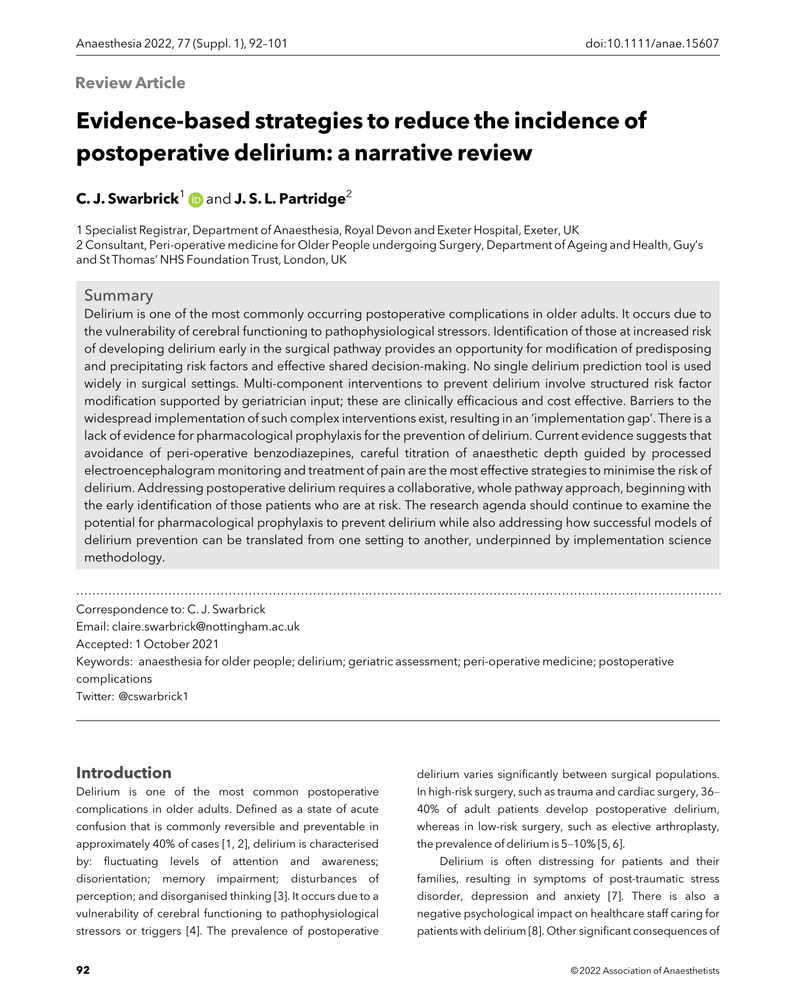
EVIDENCE-BASED STRATEGIES TO REDUCE THE INCIDENCE OF POSTOPERATIVE DELIRIUM: A NARRATIVE REVIEW
Royal Devon and Exeter Hospital, Exeter, UK and Guy’s and St Thomas’ NHS Foundation Trust, London, UK
PDF10 pages466 KB
Postoperative delirium is a common complication in older adults, often resulting from the vulnerability of cerebral functioning to various stressors. The article emphasizes the need for early identification of patients at risk, allowing for the modification of predisposing factors. It reviews the effectiveness of various strategies, including the avoidance of certain medications and the use of structured risk factor modification. The authors also address the barriers to implementing these interventions in clinical practice, noting the lack of widespread use of delirium prediction tools.
Sign in to open
Ask this resource
Answers use this document only.
Your first question is free.
More like this
Resources from the same specialty and type. Curated links will replace these when added.
Clinical Resources
Documents that extend or complement this resource.
CURRENT PRACTICE IN THE PERIOPERATIVE MANAGEMENT OF PATIENTS WITH DIABETES MELLITUS: A NARRATIVE REVIEW
Same clinical topic · Anaesthesiology
INTRATHECAL CATHETER USE AFTER ACCIDENTAL DURAL PUNCTURE IN OBSTETRIC PATIENTS: LITERATURE REVIEW AND CLINICAL MANAGEMENT RECOMMENDATIONS
Same clinical topic · Anaesthesiology
NO BLOOD TRANSFUSION FOR MY OWN ANAEMIA—TIT FOR TAT?
Same clinical topic · Anaesthesiology
PREOPERATIVE HYPERTENSION: PERIOPERATIVE IMPLICATIONS AND MANAGEMENT
Same clinical topic · Anaesthesiology
MATERNAL DEATH: LESSONS FOR ANAESTHESIA AND CRITICAL CARE
Same clinical topic · Anaesthesiology
ESAIC FOCUSED GUIDELINE FOR THE USE OF CARDIAC BIOMARKERS IN PERIOPERATIVE RISK EVALUATION
Same specialty · Anaesthesiology
GUIDELINES FOR ANAESTHESIA AND SEDATION FOR PATIENTS WHO ARE BREASTFEEDING
Same specialty · Anaesthesiology
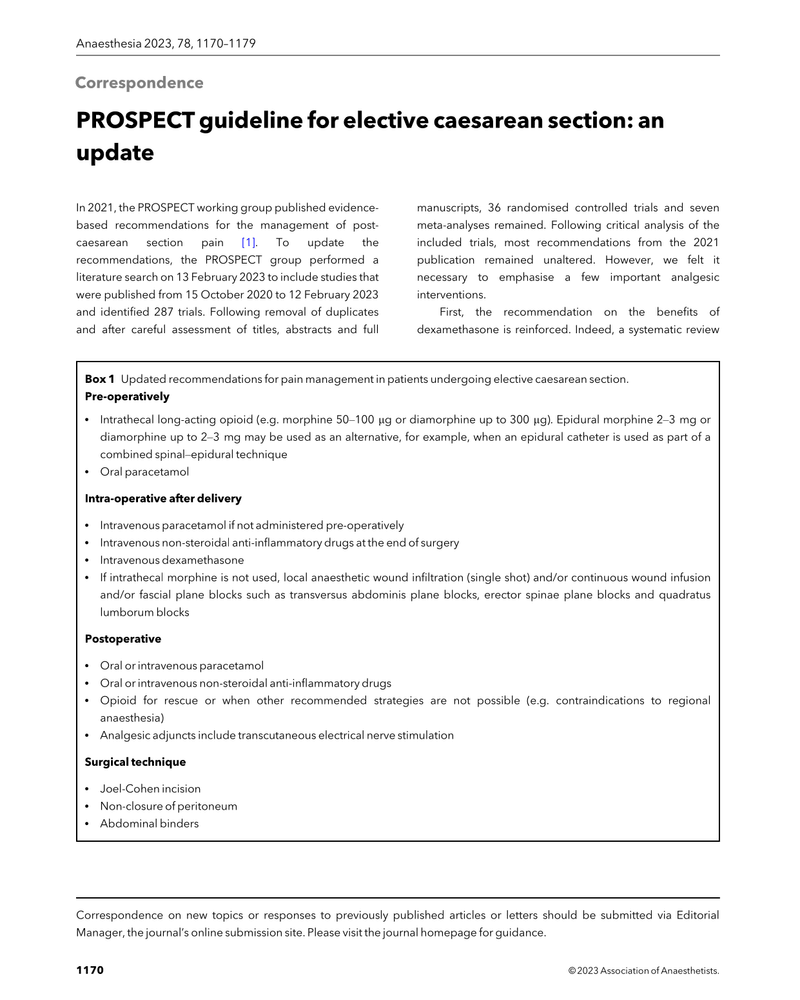
PROSPECT GUIDELINE FOR ELECTIVE CAESAREAN SECTION: AN UPDATE
Same specialty · Anaesthesiology
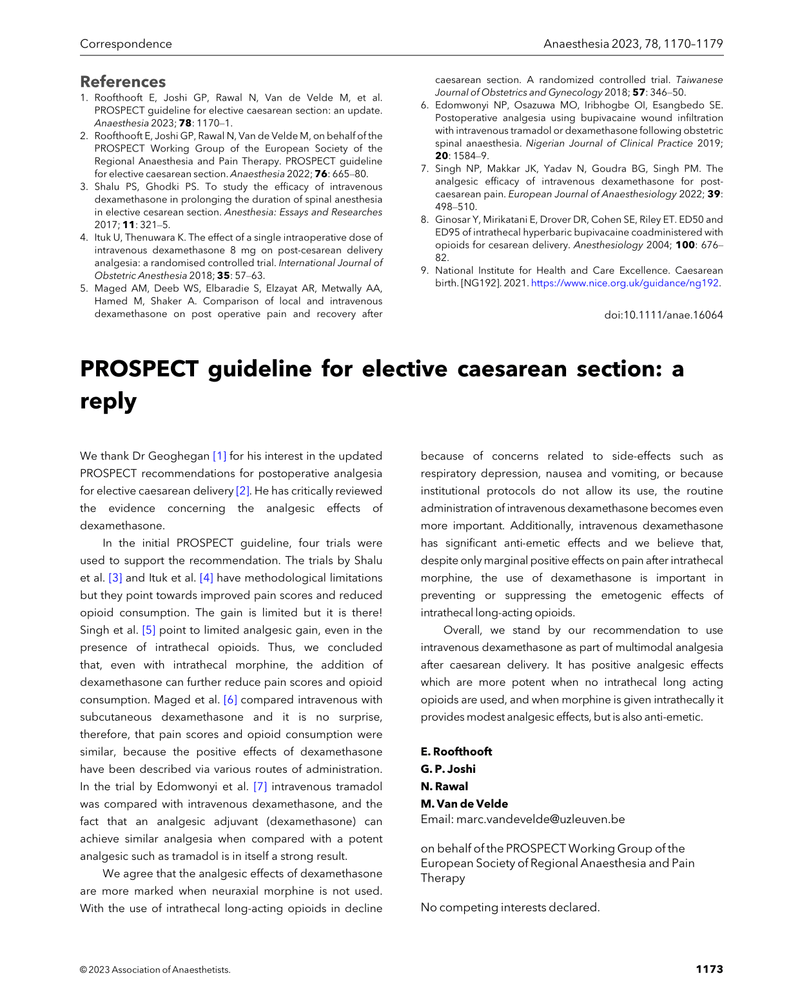
PROSPECT GUIDELINE FOR ELECTIVE CAESAREAN SECTION: AN UPDATE
Same specialty · Anaesthesiology